
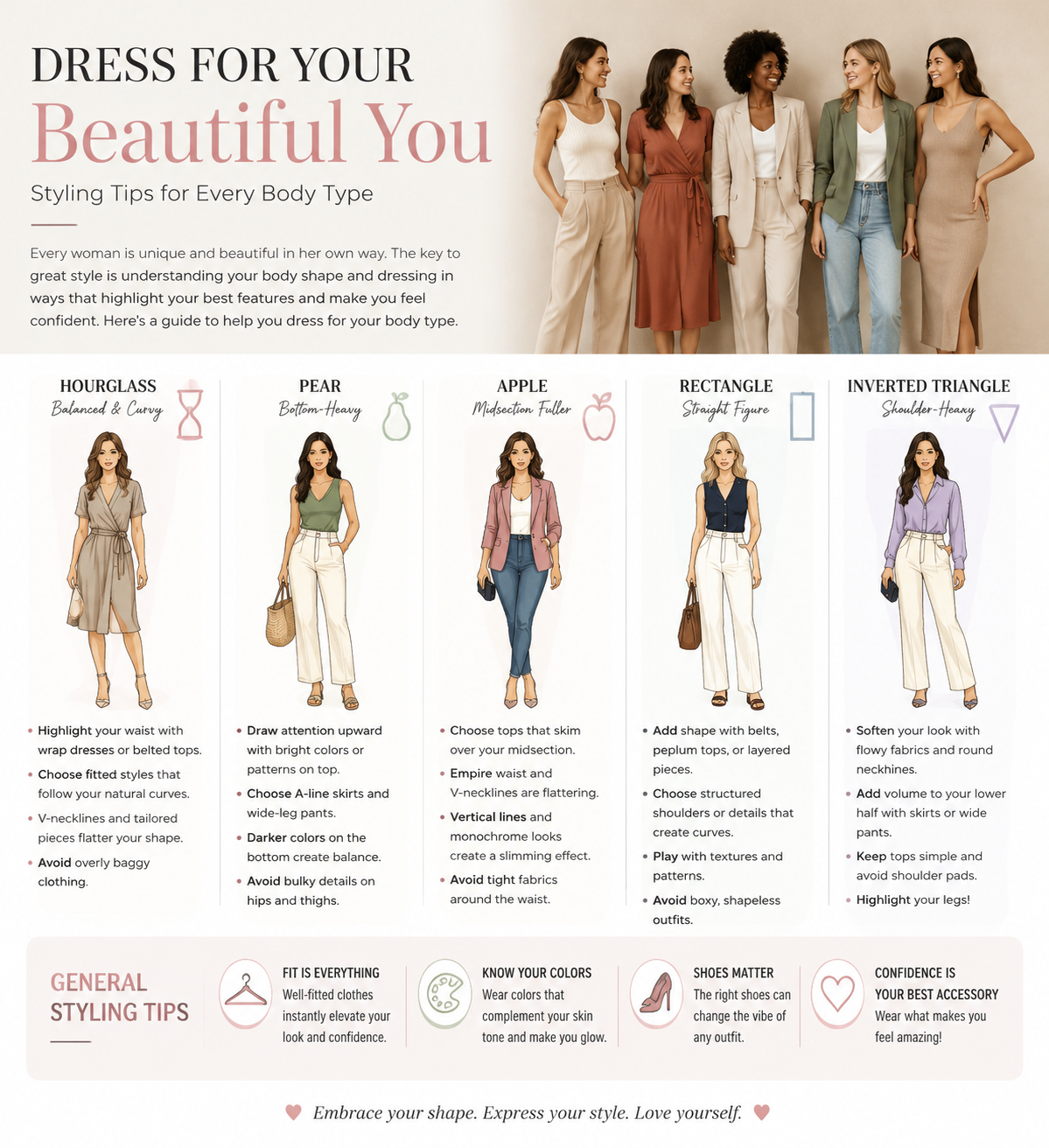
Finding your body shape should make getting dressed easier, not give you another rulebook. The goal is simply to notice your natural proportions: where your shoulders sit in relation to your hips, whether your waist is visibly defined, and where clothing tends to feel fitted first. Once you understand those visual patterns, you can choose necklines, waist placement, trousers, skirts, and layers with more confidence.
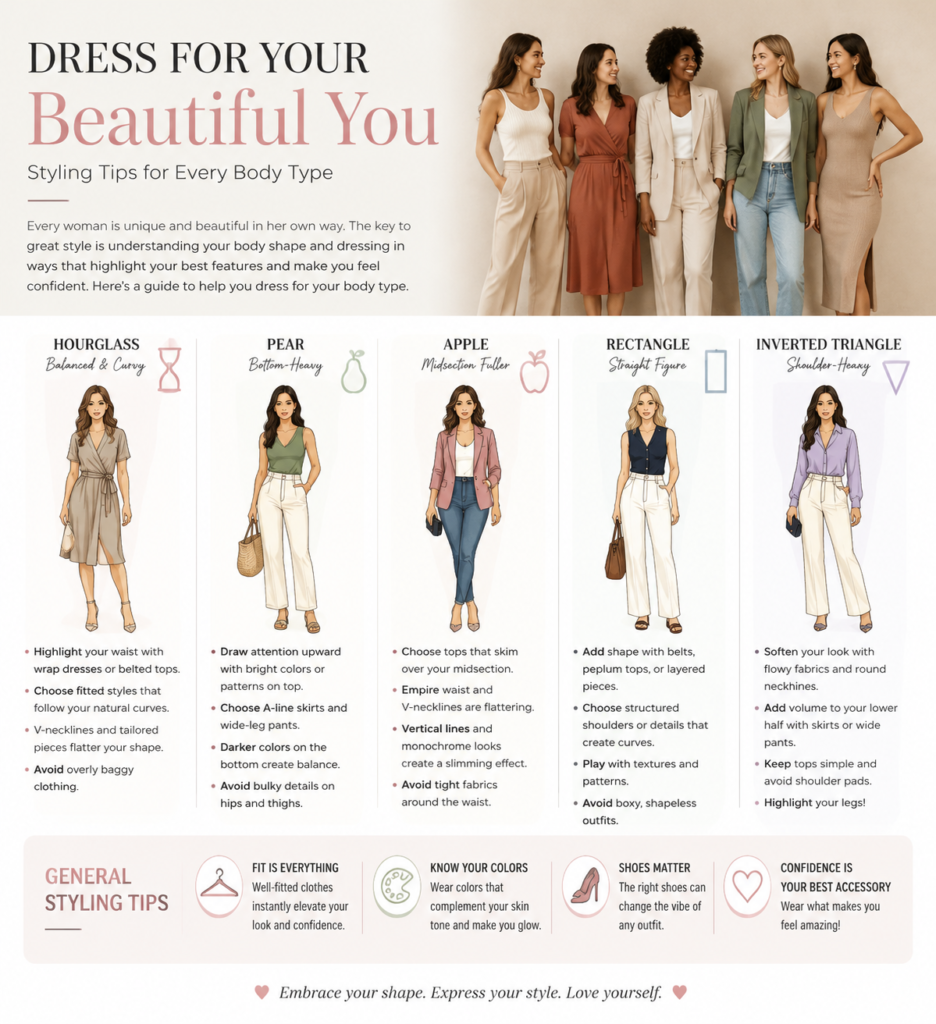
The five common labels below, hourglass, pear, apple, rectangle, and inverted triangle, are only helpful shortcuts. Many people sit between two categories, and proportions can look different depending on posture, weight changes, fabric, and the clothes you try on. Use this guide to spot your strongest pattern, then experiment from there.
Start With a Simple Mirror Check
Put on close-fitting but comfortable clothes, such as a tank top and leggings, or stand in front of a mirror in underwear if that feels comfortable. Do not pull in your stomach or pose. Look at the outline of your body from shoulders to hips. You are not looking for a number on a tape measure; you are looking for relative proportion.
- Compare the visual width of your shoulders and hips.
- Notice whether your waist curves inward clearly, gently, or hardly at all.
- Notice where trousers, skirts, and dresses feel most fitted: bust, waist, stomach, hips, or thighs.
- Take a straight-on photo if the mirror feels unclear. A simple image often makes proportion easier to see.
Repeat the check in another outfit if needed. A puff-sleeve top, padded bra, oversized trousers, or wide skirt can change the outline dramatically, which is why your natural baseline matters more than any single garment.
Hourglass: Balanced Shoulders and Hips With a Defined Waist
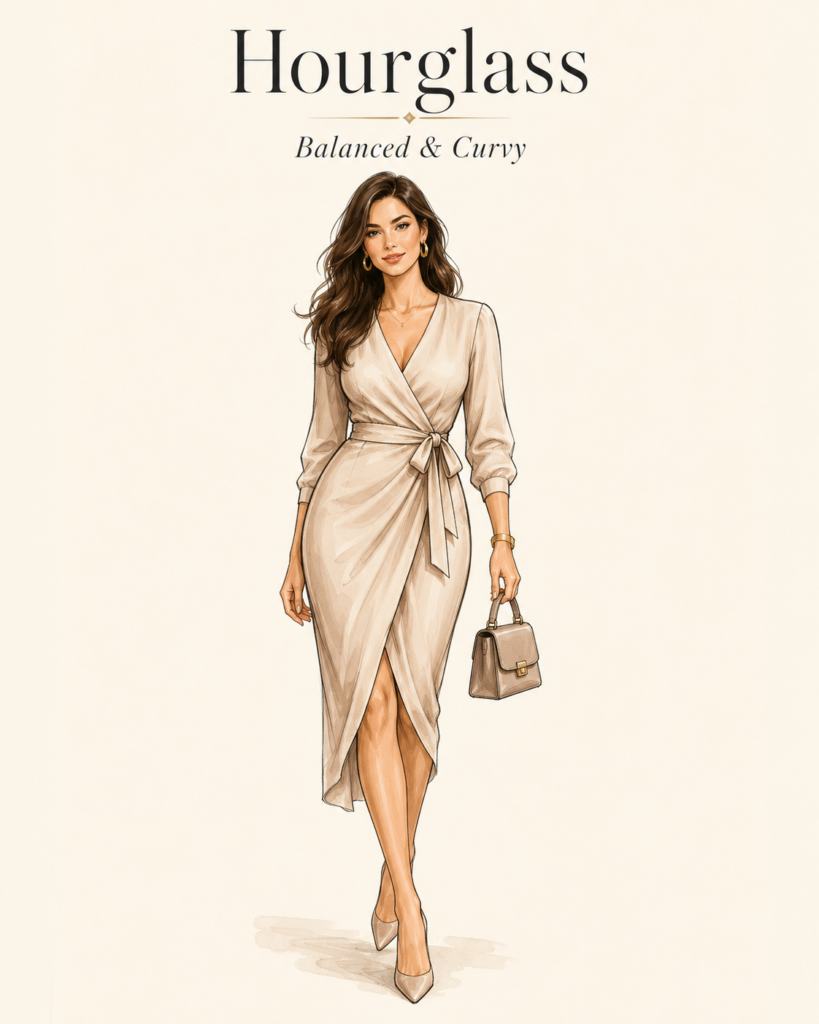
You may lean hourglass if your shoulders and hips appear fairly balanced and your waist is noticeably narrower. Your curves may be soft or pronounced; the defining idea is balance with waist definition, not a particular size or weight.
Many hourglass figures enjoy clothes that follow the waist: wrap tops, tailored knits, high-rise trousers, belted blazers, and dresses with a shaped middle. The practical styling goal is to retain the natural proportion without making every piece tight. For a deeper guide, see our Hourglass Body Type Outfit Tips and Hourglass outfit formulas for casual, work, and evening looks.
Pear: Hips Appear Wider Than Shoulders
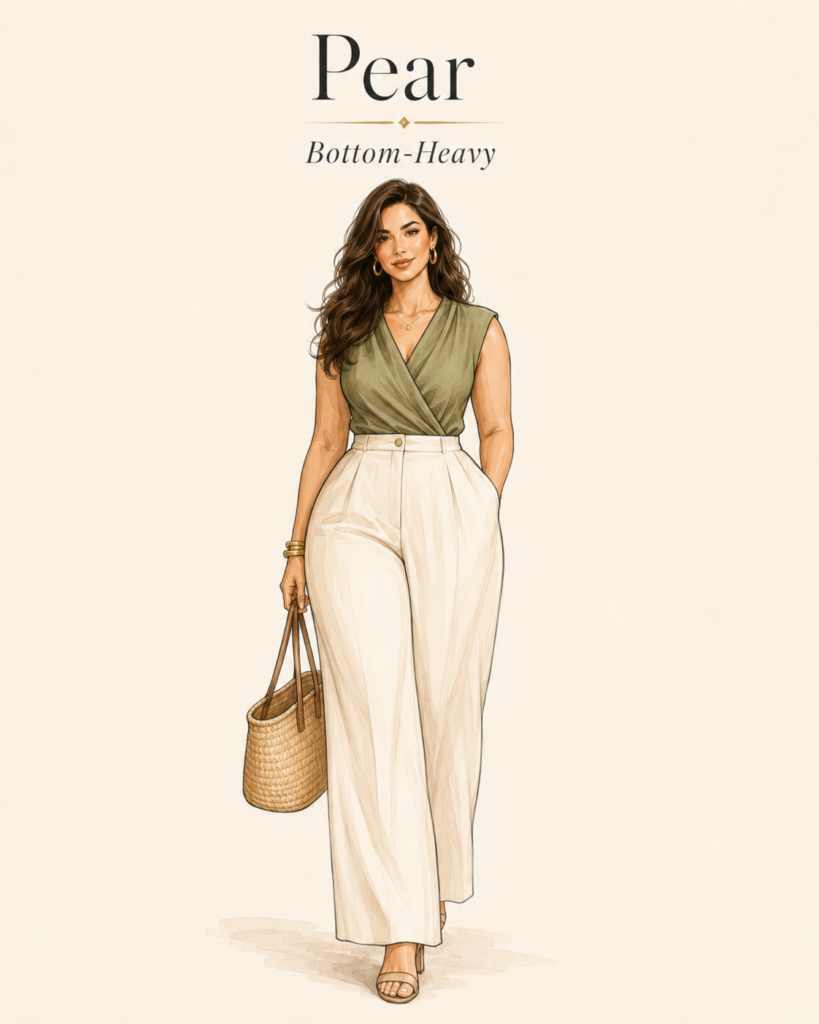
You may lean pear if your hips and thighs carry more visual width than your shoulders or bust, often with a naturally defined waist. This is sometimes described as a bottom-heavy proportion, but that phrase is not a verdict. It only tells you where an outfit may need a little more visual balance.
To test the pattern, compare a simple fitted tee with a straight-leg trouser. If the lower half reads as the stronger part of the silhouette, pear styling ideas may be useful. V-necks, expressive earrings, interesting sleeves, light or colorful tops, A-line skirts, and wide or straight-leg trousers are popular tools. Read our Pear Body Type Outfit Tips and the detailed Pear Body Shape outfit guide for examples.
Apple: More Fullness Through the Midsection
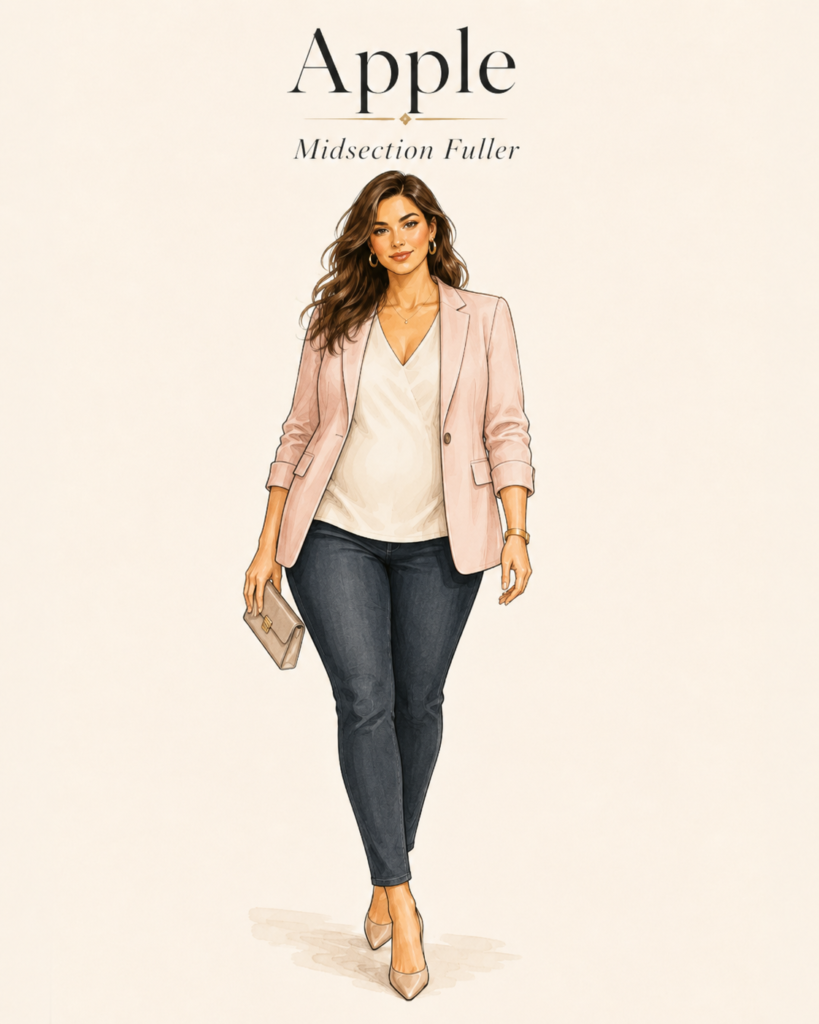
You may lean apple if your middle feels fuller or less defined relative to your shoulders and hips. Your legs can be slim, balanced, or curvy; an apple shape is not determined by one feature. The useful clue is that a narrow belt or a very rigid waistband may feel less natural than soft vertical lines or a relaxed waist placement.
Try an open jacket over a V-neck top, or a longer blouse with straight jeans. If this creates a smooth, comfortable outline, apple-focused styling is likely relevant. Open layers, skimming fabrics, monochrome combinations, and details that create length can be helpful. Explore our Apple Body Type Outfit Tips for practical formulas.
Rectangle: Similar Width Through Shoulders, Waist, and Hips
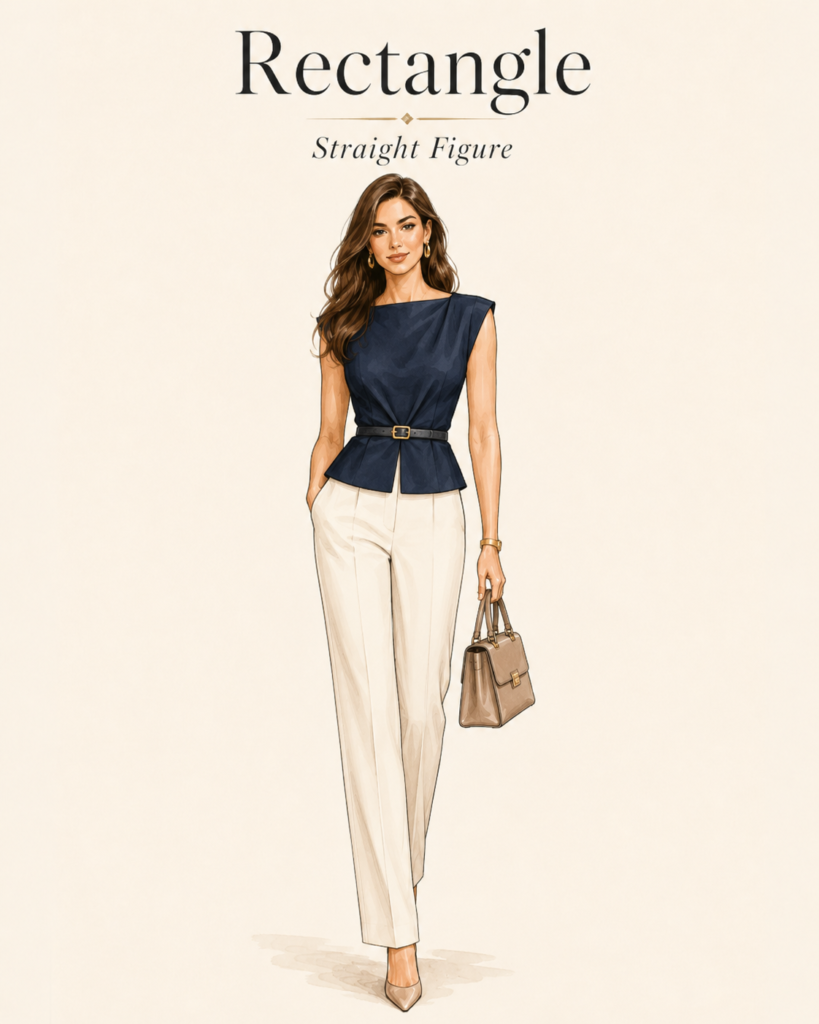
You may lean rectangle if your shoulders, waist, and hips form a relatively straight line, with little contrast between waist and hip width. This shape often looks excellent in clean tailoring and minimal pieces. If you want more curve, clothes can create it easily through belts, wrap details, peplum shapes, layered proportions, pleats, and texture.
One quick check: wear a straight top and straight trousers. If the silhouette remains mostly linear even when the clothes fit well, rectangle styling may fit you. See our Rectangle Body Type Outfit Tips for ways to create dimension without losing your personal style.
Inverted Triangle: Shoulders Appear Wider Than Hips
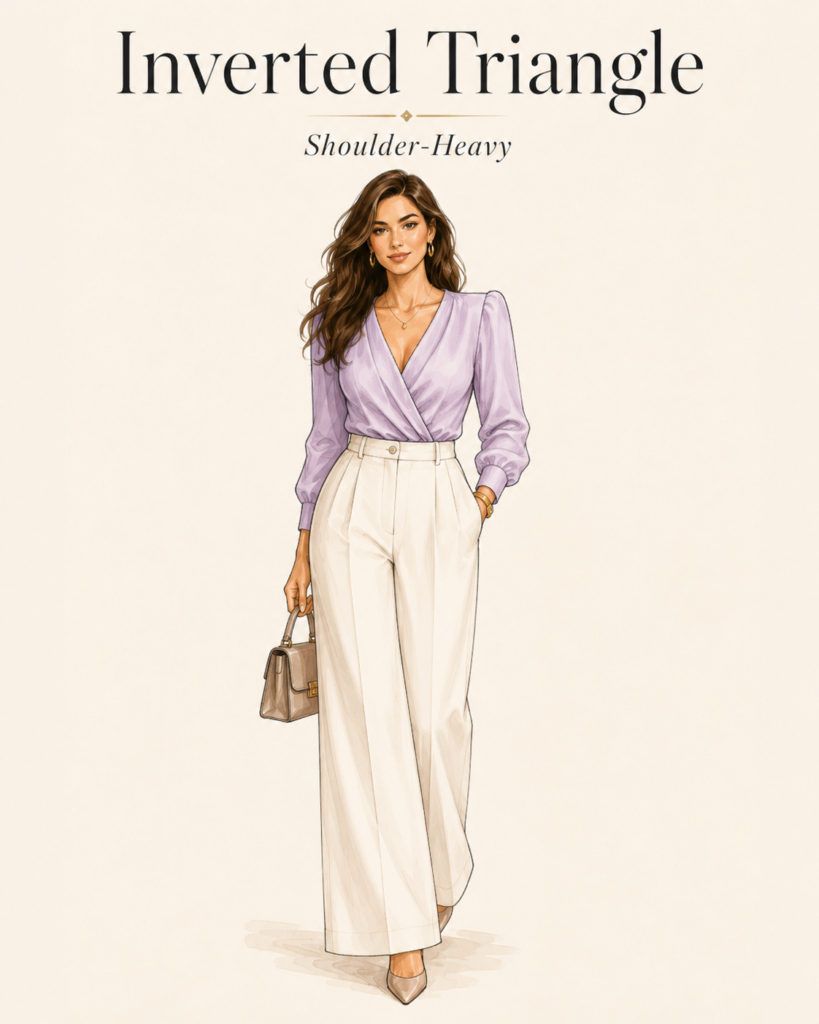
You may lean inverted triangle if your shoulders, upper back, or bust look broader than your hips. Athletic builds often fall here, but anyone can have this proportion. The visual clue is the shoulder line: it appears to lead the silhouette, while the hips are relatively narrow or straight.
Fluid necklines, simple shoulder details, A-line skirts, wide-leg trousers, pleats, and texture below the waist can create a balanced outfit. You do not need to hide your shoulders; you can simply decide where you want the focus. For examples, visit our Inverted Triangle Body Type Outfit Tips.
What if You Look Like Two Body Shapes?
That is completely normal. You might be a pear-hourglass mix with balanced curves and slightly fuller hips, or a rectangle-inverted triangle mix with straighter hips and stronger shoulders. Start with the two categories that sound most familiar. Then keep the styling ideas that solve a real dressing problem for you, such as trousers that pull at the hips, a blazer that looks boxy, or dresses that hide a waist you want to show.
Use Fit Clues, Not Just Measurements
Tape measurements can be useful, but they rarely tell the whole story. Two people with similar bust, waist, and hip measurements can look different because of torso length, shoulder width, muscle distribution, posture, or where their curves sit. Fit clues are often more practical:
- If trousers fit at the hips but gap at the waist, you may have a defined waist relative to your lower body.
- If tops fit at the shoulders but feel loose at the waist, you may benefit from shaping, tucks, or belts.
- If a very fitted waist feels restrictive but an open layer looks polished, soft vertical lines may suit your preferred proportion.
- If structured shoulders overwhelm an outfit, a softer shoulder line may feel more balanced.
Use Body Shape as a Starting Point
Body shape advice is most useful when it gives you more choices. Start with one outfit formula from the guide that feels closest to you, wear it for a real day, and notice how it feels as well as how it looks. Comfort, movement, and confidence matter as much as visual balance. Once you know which silhouettes you reach for most, use the related articles above to build a wardrobe that feels personal, flexible, and easy to wear.