
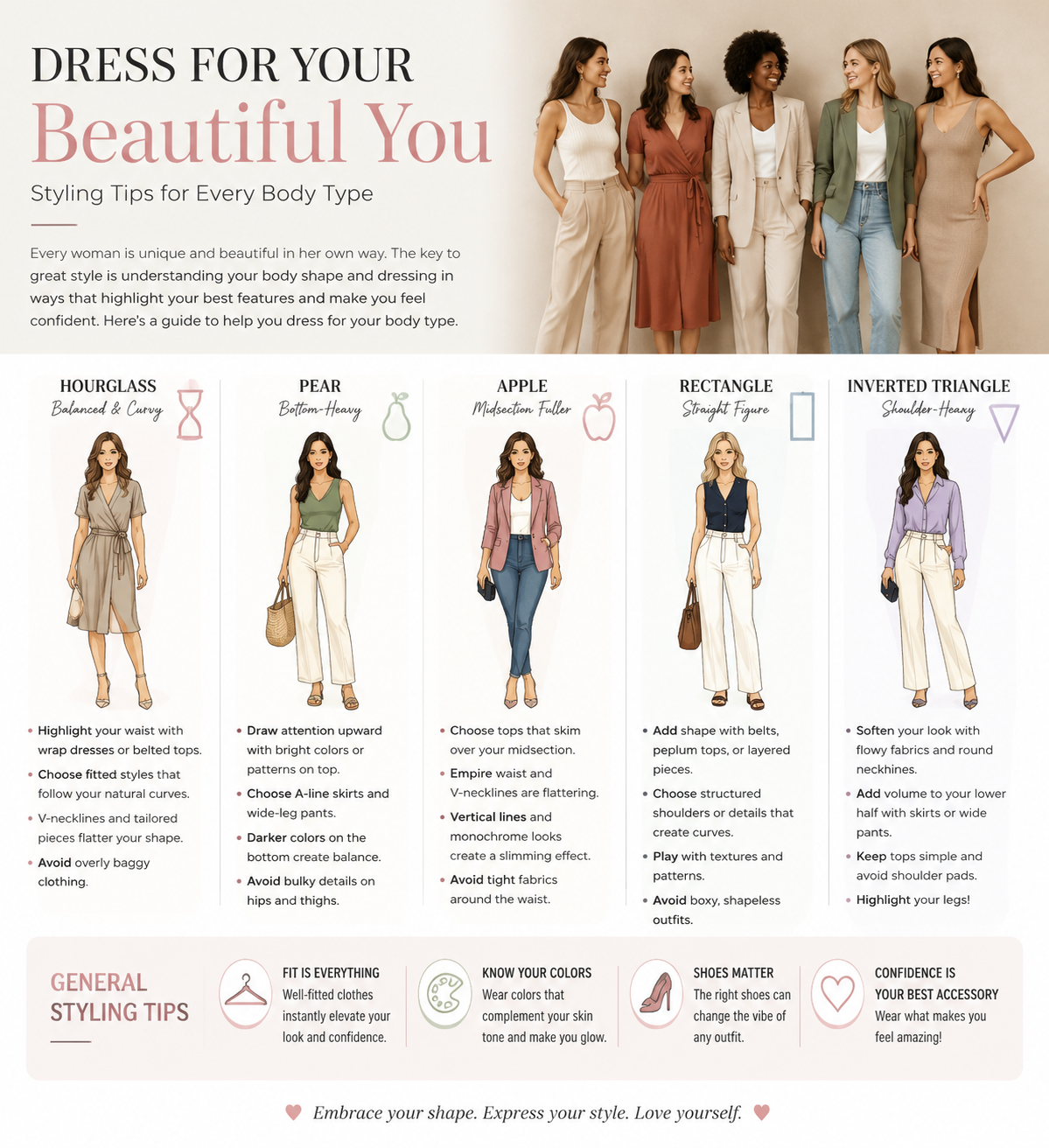
Great style is not about forcing your body into one narrow ideal. It is about understanding proportion, choosing clothes that support the shape you already have, and using color, fabric, waist placement, and silhouette with intention. Body type styling is useful because it gives you a starting point: what to highlight, where to add structure, and where to keep the outfit simple.
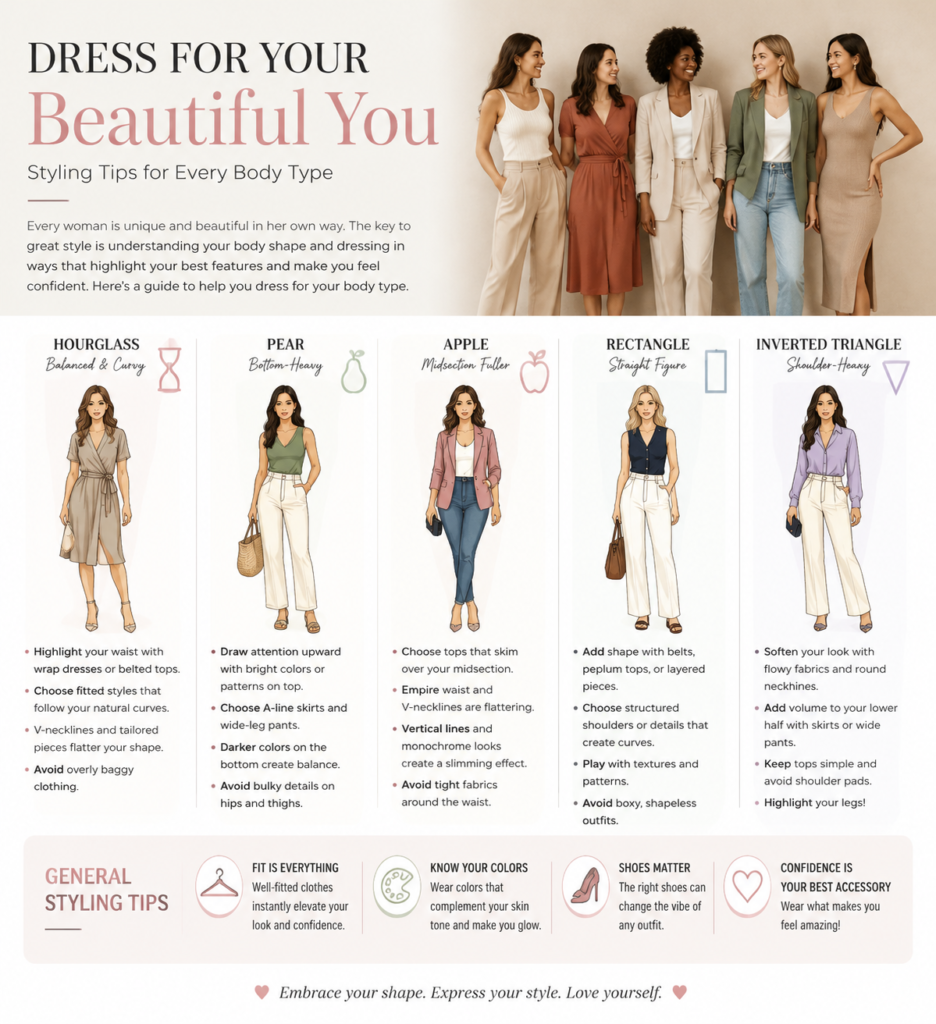
Start With Proportion, Not Rules
The most useful way to think about body types is visual balance. Some figures have a clearly defined waist, some carry more shape through the hips, some feel fuller through the midsection, some are straighter from shoulder to hip, and some have broader shoulders than hips. None of these are problems. Each shape simply responds well to different styling choices.
Hourglass: Follow the Waist
Hourglass figures usually look best when clothing follows the natural curve instead of hiding it. Wrap dresses, belted tops, tailored blazers, V-necklines, and soft waist definition work beautifully. The goal is not to make everything tight; it is to keep the waist visible so the outfit does not look boxy.
Pear: Bring the Eye Upward
Pear-shaped figures often have more visual weight through the hips and thighs. A balanced outfit usually adds interest above the waist: V-neck tops, wrap blouses, color, earrings, open collars, or structured shoulders. A-line skirts, straight trousers, and wide-leg pants can skim the lower half without clinging.
Apple: Create Soft Vertical Lines
Apple-shaped figures often feel fuller through the midsection. Tops that skim rather than squeeze, open jackets, V-necklines, longer necklaces, monochrome outfits, and soft vertical lines can make the outfit feel clean and comfortable. Avoid stiff waistbands or clingy fabrics right across the stomach if they make you feel restricted.
Rectangle: Add Shape With Styling
Rectangle figures tend to have a straighter line from shoulder to hip. This shape can wear tailored, minimal looks very well, but it also benefits from belts, peplum tops, wrap details, layered pieces, textured fabrics, and trousers with pleats or volume. The goal is to create dimension where you want it.
Inverted Triangle: Soften the Shoulder Line
Inverted triangle figures usually have broader shoulders compared with the hips. Soft necklines, fluid blouses, simple shoulders, wide-leg trousers, A-line skirts, and volume on the lower half create balance. Keep shoulder details quiet if you want the outfit to feel less top-heavy.
A Simple Styling Checklist
- Use fit first: clothes should skim, support, or define without pulling.
- Put detail where you want attention: color, print, jewelry, and texture guide the eye.
- Use waist placement intentionally: high, natural, dropped, or relaxed changes the whole silhouette.
- Let shoes support the mood: flats feel casual, pointed shoes elongate, heels dress things up.
- Choose confidence over strict rules. If you love it and it feels good, that matters.
Body type styling works best when it gives you more options, not fewer. Use these ideas as a mirror, not a cage: notice what makes you feel balanced, comfortable, and beautifully yourself.